Ember
Ember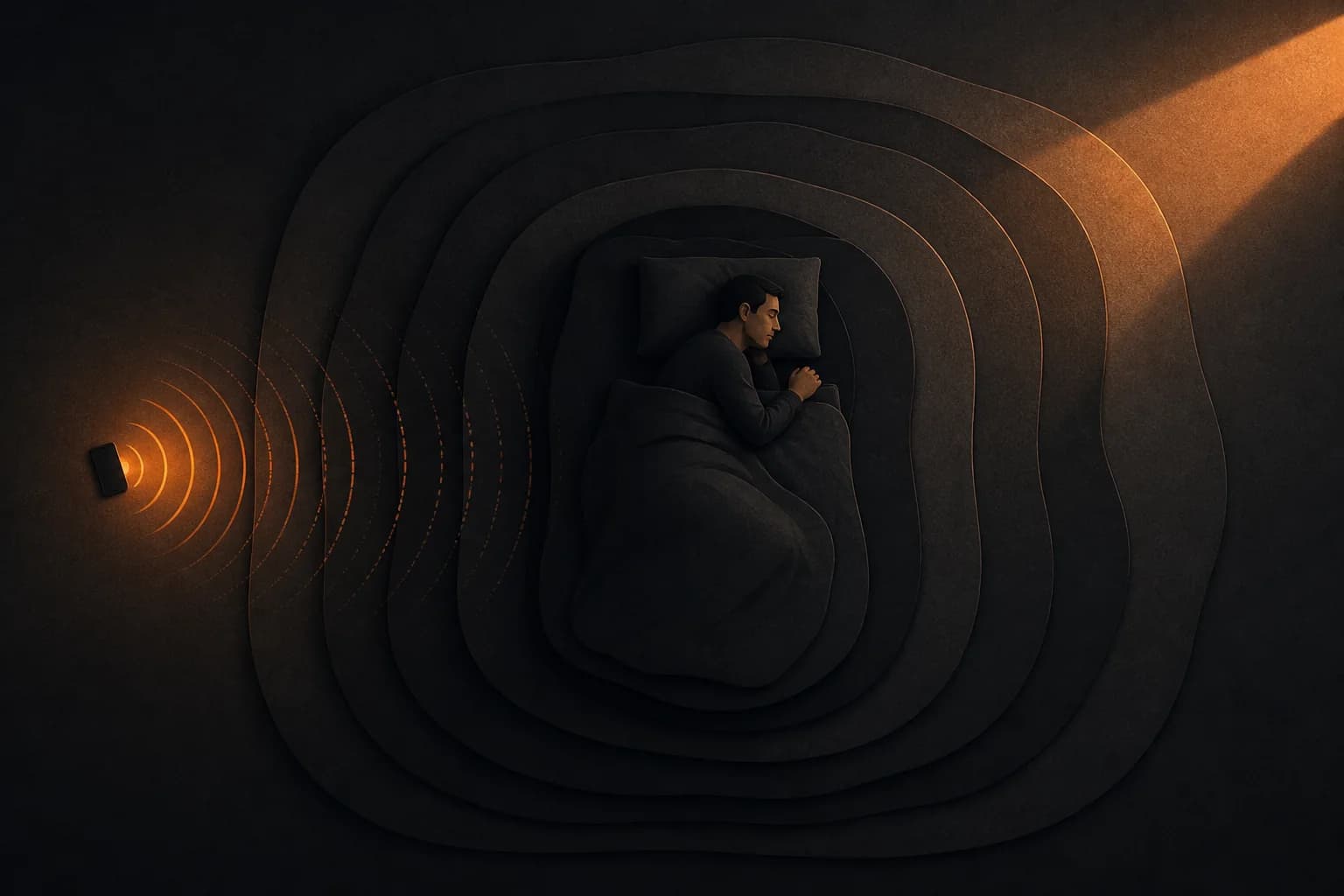
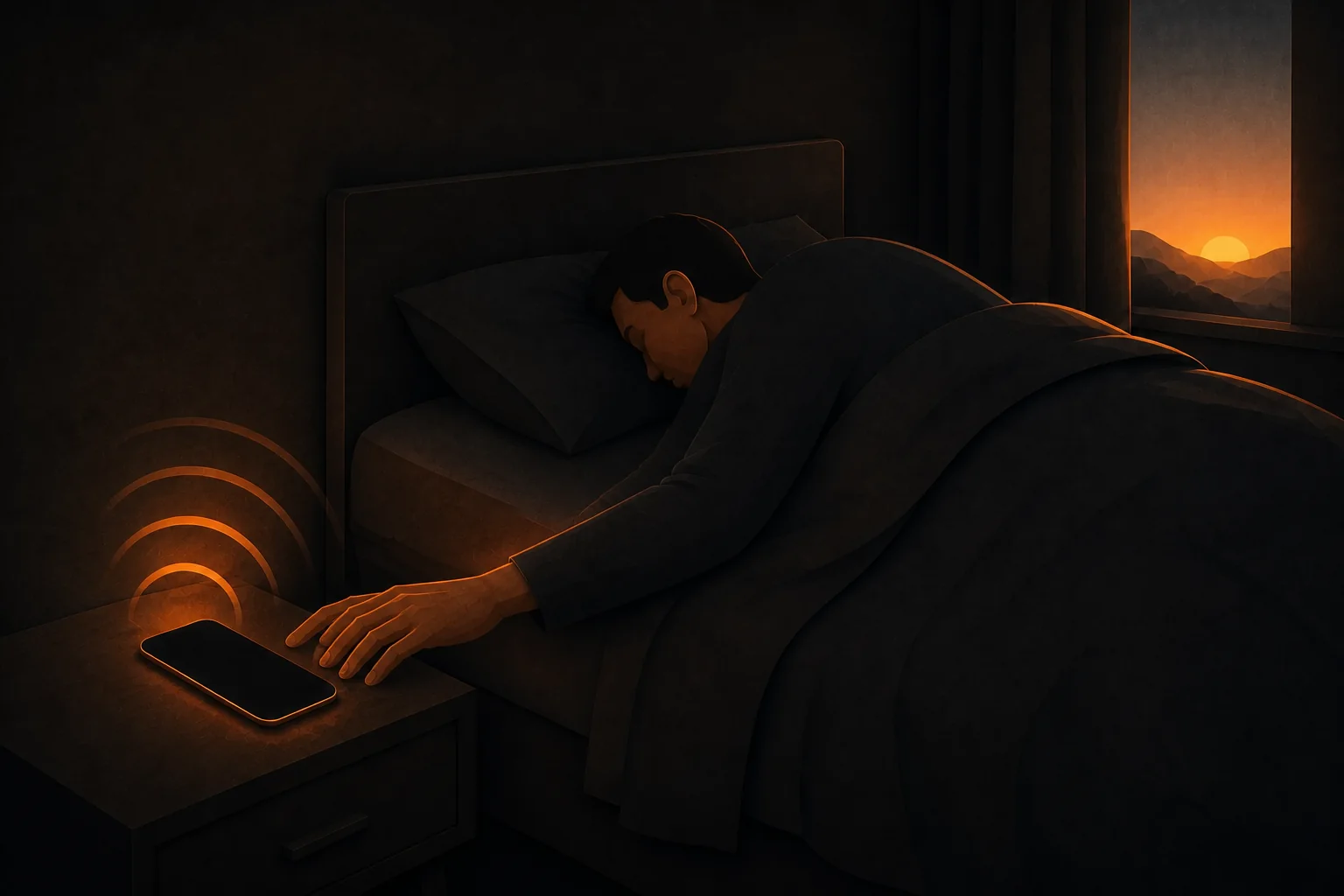
The threshold is a real number
In the lab it is measured directly. People are played tones at rising volume until they wake, and the level that wakes them is recorded.
Two patterns come up repeatedly. The threshold falls with age across childhood, adolescence and into young adulthood. And in adults, deep sleep needs a louder sound than stage 2 or REM does. In children the threshold was uniformly high and did not vary by stage (Busby, Mercier and Pivik, Psychophysiology, 1994).
Across a single night the threshold also falls steadily. The same alarm is objectively harder to sleep through at 6am than at 2am.
What pushes it higher
Losing deep sleep is the clearest one. Two nights of selectively disrupted slow-wave sleep, then a recovery night. The volume needed to wake people rose significantly (Ferrara et al., Clinical Neurophysiology, 1999). Ten participants, all male.
A review of emergency awakening lists the rest. Background noise, being a heavy sleeper, sleep deprivation, being a child, sedatives, alcohol, and hearing impairment (Bruck and Ball, Human Factors, 2007).
Note what that list does not contain. There is no test for being a heavy sleeper. It appears in the literature as a category, not a diagnosis.
The sound matters as much as the volume
Thirty-nine young adults were played nine different signals in deep sleep. Low-frequency square waves at 400 and 520 Hz won. They woke people at lower volumes than pure tones, whoops or white noise (Bruck et al., Journal of Sleep Research, 2009).
The practical consequence made news elsewhere. The high-pitched beep used in most smoke alarms is one of the worse choices available for waking a sleeping adult.
For ordinary morning alarms the evidence is thinner. A systematic review covered twelve studies. For adults woken abruptly there is not enough evidence to name a best alarm type. Melodic alarms and preferred music did show positive results, in non-emergency awakenings only (McFarlane et al., Clocks & Sleep, 2020).
Why turning it up stops working
Volume is a race you lose slowly. The threshold is not fixed, but habit is. An alarm you have dismissed a thousand times stops being an event.
No study pins that down cleanly, and anyone who tells you otherwise is selling something. What the threshold research does establish is the cost. A sound loud enough to pull you out of deep sleep wakes everyone else in the flat too. Every morning. For as long as it keeps working.
What gets a heavy sleeper up
Stop competing on volume. Require an action that cannot be completed asleep.
That is what Ember does. Silencing the alarm starts a wake-up check instead of ending anything. The scan check is the blunt version. Put a barcode in the kitchen, walk there, scan it. A photograph of the code does not pass.
You still have to hear the first alarm. Ember schedules a real system alarm on the alarm audio channel, not a notification. The silent switch does not mute it. Ordinary Do Not Disturb schedules do not either. After that, the thing keeping you up is not the sound.
The checks stack per alarm. One scan is enough for most people. Math, tile puzzles, vocabulary and a step target are there for when one scan stops working on you.
References
- Busby KA, Mercier L, Pivik RT. Ontogenetic variations in auditory arousal threshold during sleep. Psychophysiology, 1994. pubmed.ncbi.nlm.nih.gov/8153254/
- Ferrara M, De Gennaro L, Casagrande M, Bertini M. Auditory arousal thresholds after selective slow-wave sleep deprivation. Clinical Neurophysiology, 1999. pubmed.ncbi.nlm.nih.gov/10616120/
- Bruck D, Ball M. Optimizing emergency awakening to audible smoke alarms: an update. Human Factors, 2007. pubmed.ncbi.nlm.nih.gov/17702211/
- Bruck D, Ball M, Thomas I, Rouillard V. How does the pitch and pattern of a signal affect auditory arousal thresholds? Journal of Sleep Research, 2009. pubmed.ncbi.nlm.nih.gov/19302343/
- McFarlane SJ, Garcia JE, Verhagen DS, Dyer AG. Alarm tones, voice warnings, and musical treatments: a systematic review of auditory countermeasures for sleep inertia. Clocks & Sleep, 2020. pubmed.ncbi.nlm.nih.gov/33118526/
- Hilditch CJ, McHill AW. Sleep inertia: current insights. Nature and Science of Sleep, 2019. pubmed.ncbi.nlm.nih.gov/31692489/