Ember

Make room before adding more
Look at the time you want to begin and when you can realistically try to sleep. Allow for settling down and interruptions. CDC guidance starts at seven or more hours for adults aged 18–60, with different ranges at older ages. Individual needs vary. Seven is not a maximum or a personal target for everyone.
A planned interval is not measured sleep. In controlled experiments involving 48 adults across sleep-restriction and deprivation conditions, repeated short sleep opportunities produced accumulating cognitive deficits. Feeling used to the schedule did not reliably track those changes (Van Dongen et al., 2003). An earlier alarm is not an energy strategy if it keeps shrinking the night.
Choose an ordinary first step
Name one thing you already want to do: get dressed, eat without rushing, begin some study or sit quietly before demands arrive. Make it small enough to recognize when you have begun. A meaningful morning does not have to include exercise or a new productivity habit.
Prepare only what reduces a real obstacle. Put the clothes where you will use them, leave a book ready or decide what breakfast is available. These are practical ideas to test, not clinically proven energy interventions. If nothing needs preparing, you can stop here.
Give the evening a manageable ending
A quieter, comfortably lit transition can help you make room for sleep. Lower unnecessary brightness and address an actual barrier such as noise, discomfort or light entering the bedroom. NHLBI guidance recommends a quiet, cool, dark sleep environment and time to relax. It does not require buying a special product.
If a feed or episode keeps overrunning the time you wanted, choose a stopping point and a replacement you would actually welcome. Keep necessary communication and valued downtime. A night-mode setting changes neither how long you watch nor what the evening provides.
Keep permission to change the plan
Work, care, illness and shifts can limit what you control. Choose a workable rhythm rather than a minute-perfect streak. A later start, a simpler first action or no extra preparation can be the right adjustment.
Enough opportunity but difficulty falling or staying asleep is a different problem from leaving too little time. Spending longer in bed is not a universal remedy. Persistent problems deserve appropriate support rather than a stricter checklist.
Leave the next step outside the app
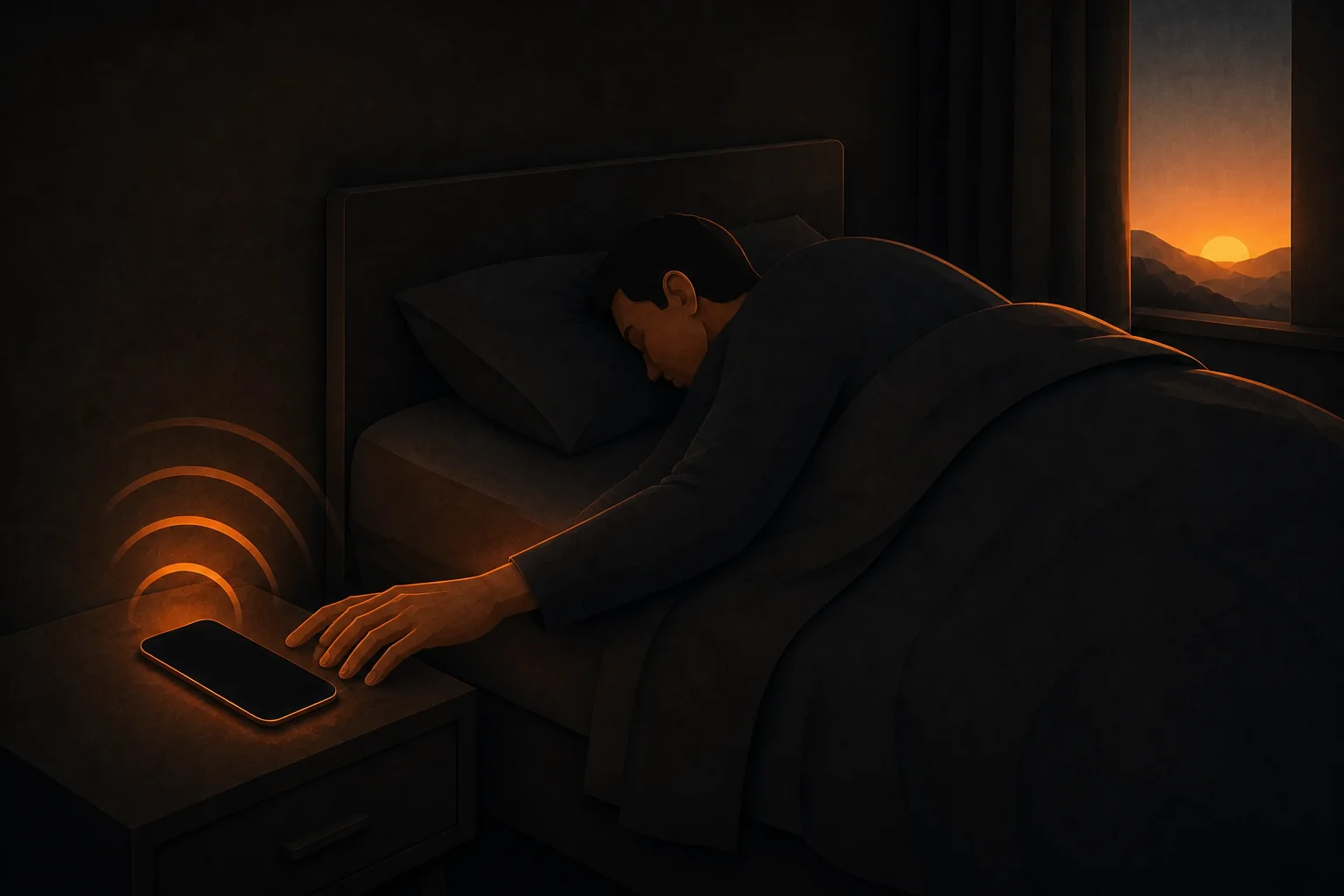
Ember can support the transition from hearing an alarm to completing a chosen wake-up check. Active participation keeps it quiet, inactivity can bring it back, and completing all selected checks disarms the session. Finishing a check does not prove that your first real-world action happened.
You can prepare on paper or with a setup you already use. After the check, the useful outcome is beginning what you chose, with enough time and a plan you are free to revise.
References
- Centers for Disease Control and Prevention. About Sleep. Adult sleep guidance, 2024. www.cdc.gov/sleep/about/index.html
- Van Dongen HPA, et al. The cumulative cost of additional wakefulness: dose-response effects on neurobehavioral functions and sleep physiology from chronic sleep restriction and total sleep deprivation. Sleep, 2003. pubmed.ncbi.nlm.nih.gov/12683469/
- National Heart, Lung, and Blood Institute. Healthy Sleep Habits. General sleep guidance, 2022. www.nhlbi.nih.gov/health/sleep-deprivation/healthy-sleep-habits